


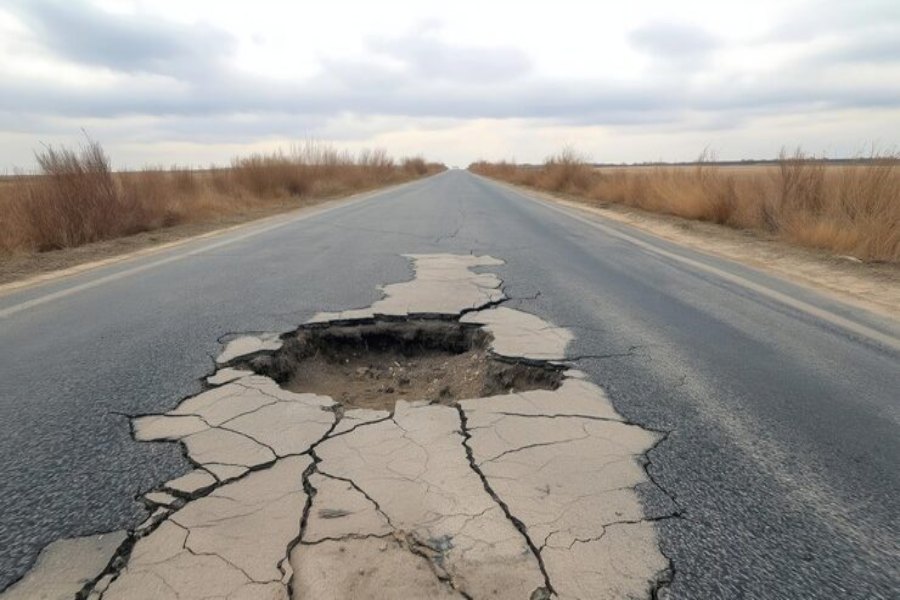
Claims against municipalities for roadway defects are governed by strict statutory rules that differ significantly from ordinary personal injury cases. In Lansing, Michigan, individuals injured by hazards such as potholes, broken pavement, or dangerous road conditions must comply with detailed notice requirements and procedural deadlines before they can pursue compensation. Many otherwise valid claims fail not because the injury lacked merit, but because a required step was missed or completed incorrectly. In some cases, missing a deadline can permanently bar recovery regardless of how serious the injury may be.
Why Road Defect Claims Against Lansing Are Difficult to Win
Claims involving roadway defects are governed by Michigan’s governmental immunity laws, which significantly limit when a city can be held responsible for injuries. Under these statutes, municipalities are generally protected from liability while performing governmental functions, including road maintenance, unless a specific legal exception applies. This means an injured person does not start from a neutral position in these cases. Instead, the law presumes the city is immune unless the claimant can prove the claim falls within a recognized statutory exception.
For road defect cases, that exception is found primarily in Michigan’s highway liability statutes, including MCL 691.1402 and MCL 691.1403. These provisions allow claims only when a roadway was not maintained in reasonable repair and the responsible governmental agency had sufficient notice of the condition and failed to correct it within a reasonable period. Courts interpret these requirements strictly, and the burden of proof rests entirely on the injured party to establish that each legal element has been satisfied.
Because of this framework, many claims are denied before they ever reach a courtroom. It is not enough to show that a road defect existed or that an injury occurred. A claimant must demonstrate that the statutory requirements are met precisely, which is why municipal road defect cases are often more difficult to pursue successfully than standard negligence claims against private parties.
The 120-Day Notice Requirement
One of the most important procedural rules governing road defect claims against the City of Lansing is the statutory notice requirement. Before an injured person can pursue compensation, Michigan law requires written notice to be provided to the governmental agency responsible for the roadway within a strict time frame. This notice is not satisfied by an informal report or assumption that the city is already aware of the condition. Instead, the written notice must specifically identify:
- the nature of the roadway defect
- the injury sustained
- the exact location of the incident
The deadline for providing this notice is strictly enforced. In most cases, it must be filed within 120 days of the incident, and courts routinely dismiss claims that fail to meet this requirement. Because this rule operates as a legal prerequisite rather than a flexible guideline, missing the deadline typically bars the claim entirely, regardless of fault or the seriousness of the injuries.
The 30-Day Prior Notice Rule
In addition to the 120 day filing requirement, Michigan law imposes another critical condition for municipal liabilit in road defect cases. To hold the City of Lansing responsible, an injured person must show that the city either knew or should have known about the dangerous roadway condition and failed to repair it within a reasonable time. In many cases, courts look for evidence that the municipality had at least 30 days to address the defect before the incident occurred. If the city did not have sufficient notice or time to respond, liability may not attach even if the condition was hazardous.
This requirement is often analyzed through the concepts of actual notice and constructive notice. Actual notice means the city was directly informed of the defect, such as through complaints, reports, or prior incidents. Constructive notice means the condition existed long enough that the city reasonably should have discovered it through routine inspections or maintenance practices. Establishing one of these forms of notice is essential, because without proof that the municipality had a fair opportunity to correct the problem, a road defect claim will usually fail regardless of the severity of the resulting injuries.
Proving the Road Was in “Unreasonable Disrepair”
To succeed in a roadway defect claim against a municipality, it is not enough to show that a flaw in the road existed. The law requires proof that the condition rose to the level of unreasonable disrepair, meaning it created a substantial and unsafe condition rather than a minor or routine imperfection. Not every pothole, crack, or uneven surface meets this threshold, and many claims fail because there is insufficient objective evidence demonstrating the seriousness or duration of the defect. Courts often evaluate documentation such as:
- photographs clearly showing the defect
- measurements indicating depth or size
- prior complaints or maintenance records
- witness statements confirming the condition existed beforehand
- repair estimates or damage documentation
How The Claim Process Works
The procedure for pursuing compensation after a roadway defect incident depends largely on the amount of damages being claimed. When the total claim is under $6,500, it may be submitted for administrative review through the City of Lansing’s Claims Review Committee, which evaluates documentation such as repair estimates, photographs, and supporting records to determine whether payment is warranted. For claims exceeding that amount, a formal lawsuit is typically required, and the case proceeds through the court system rather than administrative review. In either situation, thorough documentation is essential, because municipal claims are evaluated closely and decisions are often based on the quality and completeness of the evidence provided.
When You Must File Against MDOT Instead of Lansing
Not every roadway within the Lansing area is maintained by the city, and identifying the correct governmental agency is a critical step in any road defect claim. Many major roads are under the jurisdiction of the Michigan Department of Transportation rather than the municipality, which means claims involving those roadways must be directed to the state instead of the City of Lansing. This distinction commonly applies to state and federal routes, including roads designated with M, I, or US highway markers. Because each governmental entity has its own notice requirements and procedural rules, filing a claim with the wrong agency can delay the process or jeopardize the claim altogether. Determining who is legally responsible for maintaining the roadway is therefore an essential first step before pursuing compensation.
Evidence That Strengthens a Road Defect Claim
Strong documentation often determines whether a roadway defect claim can move forward, because municipalities closely evaluate the available proof before accepting liability. Clear, objective evidence helps establish both the existence of the defect and the extent of the damages, which is especially important given the strict standards applied in governmental liability cases. Helpful evidence may include:
- photographs showing the road defect at the scene
- measurements demonstrating size or depth of the hazard
- photographs of vehicle damage or visible injuries
- medical records or injury documentation
- police reports or incident reports
- repair estimates for vehicle damage
- medical bills reflecting treatment costs
Why Acting Quickly Matters in Municipal Injury Cases
Timing is critical in claims involving government entities because the law imposes strict deadlines and detailed procedural requirements that do not apply in most private injury cases. Missing a notice deadline, submitting incomplete information, or filing with the wrong agency can prevent a claim from proceeding regardless of the underlying facts. Because municipal claims are evaluated under technical statutory standards, many are denied not due to lack of injury, but because required steps were not completed correctly or within the required time limits.
Conclusion
Claims involving roadway defects and municipal liability are governed by a specialized legal framework that differs substantially from ordinary negligence cases. Strict statutory rules determine when a city may be held responsible, and those rules are applied closely by courts and government agencies alike. Understanding the applicable requirements, deadlines, and evidentiary standards is essential, because procedural missteps can eliminate otherwise valid claims before they are ever fully considered. In complex situations, consulting a law firm that handles injury claims in Lansing can help clarify how these legal standards apply to a specific case.