


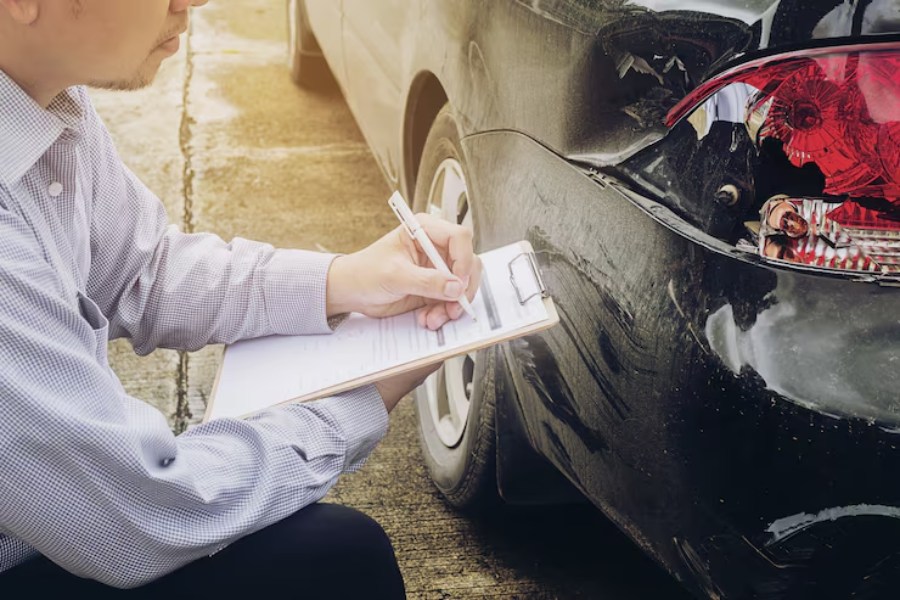
The moments after a car accident are often a blur of chaos, confusion, and shock. While your first priority is safety, the actions you take in the immediate aftermath can determine the outcome of your insurance claim or potential lawsuit. With the U.S. Department of Transportation estimating the annual economic cost of crashes in the U.S. at a staggering $340 billion, the financial stakes for victims are incredibly high. Critical evidence that can prove fault and justify compensation is often lost within minutes of a collision. This guide provides a clear, step-by-step checklist to help you systematically gather and preserve the crucial evidence needed to build a rock-solid case and protect your rights.
Step 1: Secure the Scene and Capture Perishable Evidence
Your actions at the crash scene lay the groundwork for your entire claim. While adrenaline is high, a methodical approach to documentation is essential. This initial evidence is often perishable, meaning it can disappear once the scene is cleared, making your immediate efforts invaluable.
Initial Safety and the Official Record
First, ensure everyone is safe and call 911 immediately, even if the accident seems minor. A police report is a foundational piece of evidence that provides an official, third-party account of the incident. When police arrive, be sure to get the report number and exchange information with the other drivers. Law enforcement often relies on information gathered at the scene to build their case, frequently issuing public appeals for witnesses when details are scarce, as seen in incidents in Bradford and fatal crashes in Richmond. Your thoroughness can significantly aid their report and, consequently, your claim.
The Power of Photography: Your Visual Record
Your smartphone is one of the most powerful evidence-gathering tools you have. Photos and videos create an indisputable visual record of the crash scene before it’s altered. Capture more than you think you need from various angles and distances.
Essential Post-Accident Photographs
- Overall Scene: Take wide-angle shots of the entire intersection or area from multiple vantage points to show the context of the accident.
- All Vehicles Involved: Photograph all cars from every angle (front, back, sides) to document their final resting positions and overall condition.
- Specific Damage: Get close-up photos of the damage to your vehicle and the other vehicle(s). This helps experts reconstruct the collision and determine the points of impact.
- Identifying Information: Take clear pictures of the other driver’s license plate, Vehicle Identification Number (VIN) (usually visible on the dashboard or driver’s side doorjamb), and insurance card.
- Scene Details: Document skid marks, debris on the road, vehicle parts, and any damage to public property like guardrails or signs.
- Contributing Factors: Capture photos of relevant traffic signs, signals (and whether they were working), weather conditions, and any road hazards like potholes or construction zones.
- Visible Injuries: If you have any immediate visible injuries like cuts, scrapes, or bruises, photograph them at the scene.
Gathering Witness Information
Independent witnesses provide unbiased accounts that can corroborate your version of events. Their testimony is incredibly valuable, as courts emphasize that liability must be established through credible evidence. The Supreme Court of India has reinforced this principle, stating that sympathy cannot override the law and that credible evidence is essential for establishing liability. Politely ask anyone who saw the crash for their contact information. Collect their full name, phone number, and email address, and briefly note what they saw.
Step 2: Documenting the Human Impact and Financial Toll
The evidence file extends far beyond the crash scene. Documenting your physical injuries, emotional distress, and financial losses is just as critical. This part of the file tells the story of how the accident has impacted your life.
Seeking Immediate Medical Attention
See a doctor as soon as possible after the accident, even if you feel fine. Some serious injuries, like whiplash or internal bleeding, may not present symptoms immediately. Medical records are non-negotiable evidence that officially links your injuries to the accident. This concept is supported by the legal principle that definitive medical proof is essential in serious injury or wrongful death claims to connect a negligent act to a fatal outcome. A documented medical evaluation is the first step in proving the extent of your physical damages.
Creating a Personal Injury and Expense Journal
Your recovery journey is a key part of your evidence. Start a journal to document your experience.
- Physical Symptoms: Note your pain levels daily, any new symptoms, and difficulties with daily activities (sleeping, walking, working).
- Emotional Impact: Describe feelings of anxiety, stress, or depression related to the crash.
- Financial Log: Keep a detailed record of all accident-related expenses, including medication costs, transportation to appointments, and any other out-of-pocket payments. This journal provides critical evidence for pain and suffering and other non-economic damages.
Preserving All Related Evidence
Beyond your journal, you must meticulously save every piece of physical and digital evidence related to the crash and your recovery. The importance of digital evidence is growing, with some cities now using cellphone data to analyze crash patterns and experts advocating for AI camera enforcement to improve road safety. A report from the Parliamentary Advisory Council for Transport Safety (PACTS) urged the modernization of legal frameworks to enable automated detection of driving offenses.
| Evidence Type | Why It’s Important | How to Preserve It |
| Medical Records & Bills | Directly proves the nature of your injuries and the financial cost of treatment. | Keep a dedicated physical or digital folder for all reports, bills, and receipts. |
| Damaged Personal Items | Demonstrates the force of impact and adds value to your property damage claim. | Do not repair or discard items like a broken phone, laptop, or glasses. Photograph them and store them securely. |
| Pay Stubs & Work Records | Documents lost wages and diminished earning capacity due to your inability to work. | Collect pay stubs from before and after the accident to show a clear loss of income. |
| Dashcam/Surveillance Footage | Provides an objective, unbiased account of how the crash occurred. | Immediately download the footage and back it up to the cloud and a separate physical drive. |
Step 3: Transforming Your Evidence File into a Powerful Claim
Gathering evidence is the first half of the battle. The second is knowing how to use it effectively to build a compelling case and secure the compensation you deserve.
Why a Meticulously Organized File Is Your Best Defense
Insurance companies are businesses, and their goal is often to minimize payouts. A well-organized, comprehensive evidence file is your primary tool to counter their tactics. It provides undeniable proof of the other driver’s fault and the full extent of your damages. This is especially important in Illinois, which follows a comparative negligence system. To receive compensation, you must prove the other party was more than 50% at fault. Your evidence must clearly point to their negligence, whether it was reckless driving—a primary factor in about a third of fatal Illinois crashes—speeding, or distracted driving, a factor in over 3,500 fatalities nationwide in 2021.
The Critical Role of Legal Counsel
Once you have gathered your initial evidence, the next step is having it professionally analyzed and presented. An experienced attorney understands what constitutes credible evidence in court and knows how to challenge attempts by the other side to shift blame. They can uncover additional evidence you may have missed, such as a vehicle’s event data recorder (black box) or local surveillance footage. For victims in Illinois, having a skilled legal advocate can make a significant difference. An experienced Chicago car accident lawyer can investigate the accident, coordinate with experts, and negotiate with insurance companies to maximize compensation, turning a well-organized evidence file into a successful claim.
Building Your Foundation for Recovery
Taking control after a collision begins with these deliberate, methodical steps. By diligently documenting the scene, chronicling your injuries and expenses, and carefully organizing all related paperwork, you build the strongest possible foundation for your case. A meticulously crafted evidence file is not just a collection of documents and photos; it is the narrative of your experience and the essential tool for protecting your rights and securing the fair compensation necessary for your recovery.