

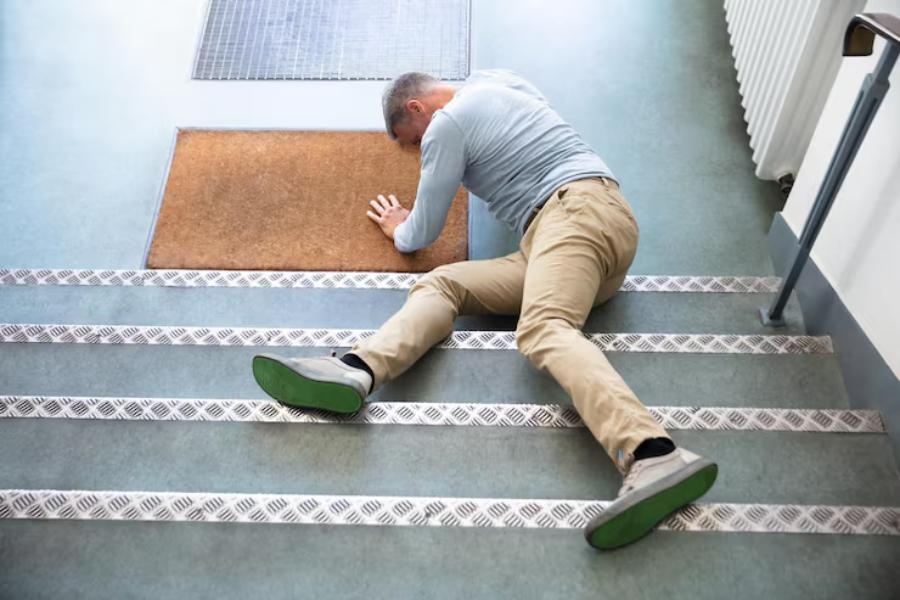
The slip and fall accident is a cultural punchline. It suggests clumsiness, a pure accident. That perception is dangerously wrong. In reality, most of these incidents follow a predictable script, traceable to a specific hazard someone failed to fix. We think this gap between perception and fact is where the real problem lives. It’s not about blame, exactly.
It’s about recognizing that what we call an accident is usually the final step in a chain of oversights. This text explores why that chain persists and how the mindset of inevitability creates more risk, not less.
Why Slip and Fall Injuries Are Commonly Seen as Accidents
The default explanation is bad luck. Someone wasn’t looking. They tripped. It just happened. This view is comforting. It absolves everyone of deeper responsibility. It frames the event as a random blip, not a systemic failure. That cultural story is powerful and sticky.
The Assumption That Falls Are Just Bad Luck
This mindset is everywhere. It shifts focus from the condition of the property to the behavior of the person who fell. The question becomes “Why weren’t you more careful?” instead of “Why was that hazard there?” It’s a subtle but profound difference that shapes everything from incident reports to initial media coverage. Honestly, it lets property owners off the hook psychologically before any legal analysis even begins.
How This Mindset Shapes Property Owner Behavior
When you believe falls are primarily about individual clumsiness, your operational priorities change. Prevention seems less urgent, more like a courtesy than a requirement. Resources get allocated elsewhere. The behavioral outcomes are pretty obvious:
- Ignoring a small spill or a slightly torn mat because “people should watch where they’re going”;
- Putting off repairs to flooring or lighting, viewing them as cosmetic, not safety, issues;
- Swinging into action with new signs and cleanup crews only after a reported injury, not before.
This reactive posture is expensive and legally naive. It treats the hazard as an unavoidable cost of doing business rather than a controllable variable. That’s a terrible way to run anything.
The Most Common Preventable Causes of Slip and Fall Injuries
Forget Acts of God. The typical causes are mundane, visible, and entirely fixable. They point directly to maintenance schedules, housekeeping routines, and basic attentiveness. These aren’t mysteries. They’re checklists.
Surface Conditions and Maintenance Failures
The walking surface itself is the usual suspect. A failure here isn’t about a sudden, unforeseeable event. It’s about a known condition left to deteriorate. Water, cracks, wear, and tear. These things don’t appear instantly. They develop. Common failures are a catalog of neglect:
- A wet floor from a leaky cooler or tracked-in rain, left without a sign or mop for an extended period;
- Loose carpeting on a staircase or a cracked tile in a high-traffic lobby, reported but not repaired;
- Snow on an entryway or clutter in a hallway, not cleared according to any reasonable schedule.
These conditions create a predictable physics problem. Friction fails. Balance is lost. According to our data, this category accounts for the overwhelming majority of incidents. It’s not rocket science. It’s basic upkeep.
Lighting, Visibility, and Environmental Factors
You can’t avoid a hazard you can’t see. Poor lighting turns a minor uneven surface into a genuine trap. It removes the individual’s chance to react. Environmental obstructions do the same thing, creating blind corners or hiding floor-level dangers. The oversights are remarkably consistent:
- Stairwells or parking garage ramps illuminated by a single, flickering bulb;
- Exterior lights over a doorway burnt out for weeks, creating a shadowy entrance;
- Boxes, signage, or plants placed in a way that blocks the line of sight to the floor ahead.
This isn’t about darkness. It’s about contrast and shadow. A well-lit area shows the changes in elevation, the spill, the obstacle. A poorly lit one hides them until it’s too late.
Why Prevention Often Breaks Down in Practice
Most property managers will say safety is a priority. Their written policies probably state that. The disconnect happens in the daily grind, where other pressures like budget, time, and convenience consistently win out. Theory loses to practice every single time.
Gaps Between Policy and Reality
A safety binder on a shelf does nothing. The gap between a formal policy and the lived reality on the property is where risk explodes. Procedures exist but aren’t followed. Inspections are scheduled but rushed or skipped. The breakdowns are procedural and cultural:
- Having a detailed inspection checklist that gets filled out retroactively once a quarter;
- Conducting “walk-throughs” that are too fast and never vary their route or timing;
- Creating a hazard reporting system that staff avoid using because it leads to more work, not action.
When no one is held accountable for spotting and reporting a loose handrail, it stays loose. It’s that simple. The system is designed for paperwork, not for actually finding problems.
The Cost-Benefit Miscalculation
Owners often see prevention as a pure cost. New mats, extra lighting, and more frequent cleaning quickly add up. They weigh this against the perceived low probability of a serious fall on their property.
This math is catastrophically short-sighted. It ignores the staggering cost of a single claim: medical bills, legal fees, settlement payouts, increased insurance premiums, lost staff time managing the crisis. According to our analysts, a single moderate injury claim can wipe out a decade of “saved” maintenance budgets. It’s a brutal and entirely avoidable equation.
The Legal Implications of Treating Preventable Falls as Accidents
The law doesn’t care about cultural perceptions. It cares about foreseeability and reasonableness. Was the hazard foreseeable? Was the property owner’s response reasonable? Calling something an “accident” is not a legal defense. It’s an admission you didn’t see it coming, which can itself be evidence of negligence if you should have.
How Liability Is Evaluated in Slip and Fall Cases
The analysis is practical. How long was the hazard there? Should routine inspections have found it? Did the owner have a reasonable process to discover and fix such issues? The legal focus is on the owner’s conduct, not the visitor’s momentary inattention. A “wet floor” sign placed an hour after a spill tells a story. So does a work order for a broken step that’s been pending for months. The timeline of prevention, or its absence, becomes the central evidence.
When Prevention Failures Become Legal Exposure
This is where the theoretical risk gets real. A documented history of ignored inspection reports or unfixed hazards transforms a preventable accident into a strong case for liability. The owner’s knowledge is key. In Michigan, as elsewhere, local legal expertise becomes critical in parsing these timelines and standards of care.
A firm like The Clark Law OfficLe in Lansing routinely sees cases turn on these granular details, such as a maintenance log that shows a pattern or employee testimony about reported dangers. This isn’t about dramatic acts of negligence. It’s about the quiet, daily accumulation of ignored duties that the law finally tallies up after a fall. The exposure was built day by day.
How Property Owners Can Reduce Slip and Fall Risk
Reducing risk isn’t about grand gestures. It’s about boring, consistent execution. It requires moving safety from an abstract value to a measurable, auditable process with clear ownership. The goal is to make hazard detection and correction a reflexive part of operations, not an extra task.
Practical Prevention Measures That Actually Work
Forget the binder. Focus on actions that create visible change and accountability. The measures that move the needle are systematic, not sporadic:
- Implementing frequent, unannounced inspections with a simple digital checklist that timestamps and geo-tags findings;
- Treating every minor hazard, such as a small rip or a dim bulb, as an urgent work order and closing the loop quickly;
- Training every staff member, from janitorial to management, on a simple “see it, report it, cordon it” protocol for immediate risks.
This turns prevention into a distributed responsibility. It creates a culture where a problem left unfixed is the anomaly, not the norm.
Why Consistency Matters More Than One-Time Fixes
A one-time cleanup after a lawsuit doesn’t count. The legal standard is about “reasonable care under the circumstances,” which implies an ongoing duty. Sporadic effort proves you can do it, but choose not to. Consistent, documented effort proves you are doing it. It’s the difference between having a policy and having a practice. The former might check a box for an insurer. The latter is what actually prevents the next fall and defends you when, despite everything, one happens.
Conclusion
The slip and fall accident is rarely an act of true randomness. It is almost always the endpoint of a visible, known, and unaddressed hazard. The cultural reflex to call it bad luck is a powerful enabler of this cycle. Shifting that mindset among owners, managers, and the public is the first step.
The next is installing the mundane machinery of consistent inspection, prompt repair, and clear accountability. This isn’t a legal strategy. It’s an operational one that happens to have profound legal benefits. It replaces the fiction of the unavoidable accident with the manageable reality of routine maintenance. The difference, in human and financial cost, is everything.