

The aftermath of a car accident in Denver can be a whirlwind of frustration and financial stress, even when no one is seriously hurt. You’ve followed the rules, exchanged information, and filed a claim. Still, now you face a new obstacle: the other driver’s insurance is refusing to pay the full cost of your vehicle repairs or is offering a settlement that barely covers a fraction of the damage. This leaves you staring at a hefty repair bill and feeling powerless against a large insurance corporation.
This situation is unfortunately common. With over 100,000 car accidents in Colorado in 2023, many of which result in property damage disputes, Denver residents need a clear path toward resolution. When insurance companies fail to act fairly, Denver’s small claims court provides a powerful and accessible tool for individuals to seek justice and recover their losses without the overwhelming expense and complexity of a traditional lawsuit.
This guide is designed to demystify that process. It will provide a clear, step-by-step walkthrough of how to file and pursue a small claims case for property damage in Denver. From determining if your case qualifies and gathering the right evidence to preparing for your day in court, you will learn the essential steps to take control of your financial recovery.
Before You File: Understanding the Risks and Limitations
It is essential to recognize that, although the small claims court is a simplified legal process, it remains a formal court of law with legally binding outcomes. The information presented here is for educational purposes and is not a substitute for guidance from a licensed attorney who can assess the specific details of your case. The legal landscape is complex, as evidenced by recent changes in Colorado that increased the cap on what can be awarded for non-economic damages in higher courts, showing how quickly laws can shift.
The primary risk of small claims court is its finality; if you lose your case, you generally cannot appeal the magistrate’s decision. Furthermore, winning a judgment does not automatically mean you will receive payment. You may need to take additional legal steps to collect the money from the defendant, a process that can be challenging and time-consuming if the other party is uncooperative.
When you choose to represent yourself, known as proceeding pro se, you assume full responsibility for following all court rules and meeting every deadline. A simple procedural mistake, such as failing to properly notify the other party of the lawsuit, could lead to your case being dismissed. This places the entire burden of navigating the legal system correctly on your shoulders.
Step 1: Determining if Small Claims Court is Right for Your Case
The Monetary Limit in Denver
The first and most important factor in determining your eligibility for small claims court is the amount of money you are seeking to recover. In Colorado, small claims court limits cases to $7,500 in damages. This limit includes the total of your vehicle repair costs, rental car fees, towing charges, and any other property-related expenses. If your total damages exceed this amount, you have two options: you can either waive your right to the excess amount to stay within the small claims limit, or you must file your case in a higher court, such as County or District Court.
The Statute of Limitations
A statute of limitations is a firm legal time limit for starting a lawsuit. If you miss this deadline, the court will almost certainly refuse to hear your case, regardless of how strong your evidence is. According to Colorado law, for most car accident claims, you havethree years from the date of the accident to file your lawsuit. This makes it crucial to act promptly and not delay in seeking a resolution for your property damage.
Property Damage Only: A Critical Distinction
The small claims court in Colorado is specifically designed to resolve monetary disputes. It is critical to understand that it cannot award damages for personal injuries, which include medical bills, compensation for pain and suffering, or lost wages from the time you were unable to work. Denver car accidents frequently result in physical harm, even in collisions that seem minor at first, with numerous incidents leading to hospitalizations and serious injuries. If you or any passenger in your vehicle experienced any physical harm, your case becomes far more complex, and its potential value likely exceeds the scope and purpose of small claims court.
For cases involving personal injuries, the stakes are significantly higher, and navigating the legal system requires specialized expertise. The team at Frank Azar Car & Truck Accident Lawyers focuses exclusively on helping accident victims in Denver. They understand that you’re a person, not a case number, and their client-focused philosophy is built on maximizing compensation for medical costs, lost income, and the emotional trauma of an accident. If your case involves more than just vehicle repairs, consulting with an experienced car accident lawyer in Denver is the most critical step you can take to protect your rights.
Step 2: The Filing Process: A Step-by-Step Guide
Gathering Your Essential Evidence
A successful small claims case is built on a foundation of strong, clear evidence. Before you even begin to fill out paperwork, you must meticulously gather all documents related to the accident and your resulting damages. In 2023, Denver recorded 77 traffic fatalities, the highest number in a decade, underscoring the serious nature of every collision and the importance of official documentation. Your evidence file should include the following:
- Police Report: The official report filed by the Denver Police Department or Colorado State Patrol that details the accident.
- Photos and Videos: Clear images of the accident scene from multiple angles, the damage to both vehicles, and any relevant details like road signs, traffic signals, or weather conditions.
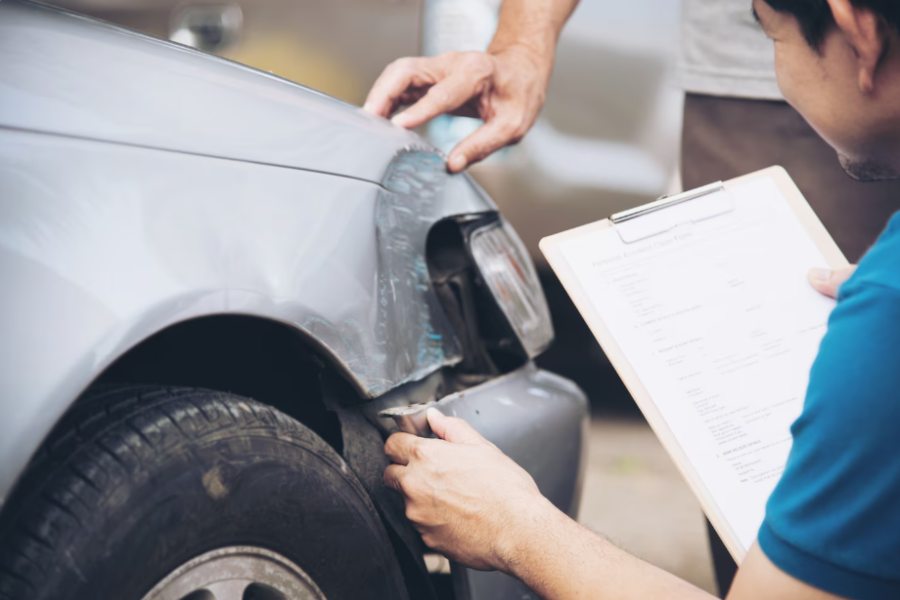
- Repair Estimates: Obtain at least two, preferably three, written estimates from different, reputable auto body shops to substantiate the cost of repairs.
- Proof of Expenses: Keep all receipts for related costs, such as towing services, rental car fees, or any other out-of-pocket expenses you incurred.
- Witness Information: The full names and contact information for anyone who witnessed the accident and is willing to provide a statement.
- Communications: Copies of any emails, letters, or text messages exchanged with the other driver or their insurance company. A formal denial of your claim from an insurer can serve as powerful evidence that you attempted to resolve the issue before resorting to court action.
Completing and Filing the Paperwork
The primary legal document you will need to initiate your case is the Complaint (JDF 250). This form is available on the Colorado Judicial Branch website. When filling it out, you will need to clearly identify the plaintiff (you) and the defendant (the at-fault driver), state the exact dollar amount you are suing for, and provide a short, factual summary of what happened and why the defendant is legally responsible for your damages. Once completed, the form must be filed with the Denver County Court Small Claims Division, along with the required filing fee, which can be found on the court’s official website.
Weighing Your Options: Small Claims vs. Higher Court
Choosing the right legal venue is a critical decision that depends on the specifics of your case. For simple property damage disputes under the state limit, small claims court is often the most efficient option. The following table helps visualize the key differences between your options:
| Feature | Denver Small Claims Court | County or District Court (with a Lawyer) |
| Monetary Limit | Up to $7,500 | No limit (or much higher limits) |
| Case Types | Property damage, monetary disputes | Property damage, personal injury, pain & suffering |
| Legal Representation | Not required (you can represent yourself) | Highly recommended (complex rules of procedure) |
| Process Speed | Faster, typically resolved in a few months | Slower, can take a year or more |
| Cost | Low (filing fees only) | Higher (legal fees, expert witnesses, court costs) |
| Best For | Minor, straightforward property damage disputes. | Complex cases, serious injuries, or high-value claims. |
Step 3: Serving the Defendant and Preparing for Your Court Date
The Importance of Service of Process
Service of process is the formal legal term for officially notifying the defendant that you have filed a lawsuit against them. This is not just a courtesy; it is a fundamental requirement of the legal system designed to ensure due process. The court cannot hear your case or issue a judgment until you can provide proof that the defendant was properly served with the complaint and summons.
Approved Methods for Serving Papers
In Denver, you have several approved methods for completing service of process. You cannot simply hand the papers to the defendant yourself. Instead, you must use one of the following options:
- Sheriff’s Department: You can pay a fee to the Denver Sheriff’s Department, and a deputy will personally deliver the court documents to the defendant.
- Private Process Server: These are certified professionals you can hire to locate and serve the defendant. They are often used when a defendant is difficult to find.
- Certified Mail: You can send the summons and complaint via certified mail with a return receipt requested. However, be warned that this method fails if the defendant refuses to sign for the mail.
Preparing Your Argument for the Hearing
Once the defendant is served and a court date is set, you must prepare to present your case to the magistrate. Organize all of your evidence in a logical, chronological order. Create a simple outline of what you plan to say, focusing on the key facts: what happened, who was at fault, and the exact amount of your damages. Practice presenting your story clearly and concisely in about two to three minutes. Although the hearing is less formal than a trial, it is still a court of law, and maintaining a professional, calm, and direct demeanor is essential to effectively making your case.
Understanding Legal Principles in Your Case
To win your case, you must prove that the other driver was negligent. In simple terms, negligence means the other driver had a duty to operate their vehicle safely, they breached that duty through a careless action, and that breach directly caused the damage to your car. A clear example of a breach of duty is speeding, which was a top factor in traffic fatalities in Colorado in 2023, causing 258 deaths and surpassing even impaired driving.
In a civil case like small claims, the burden of proof rests on the plaintiff (you). This means you must persuade the court that it is more likely than not that your version of events is true. This is a lower standard than the beyond a reasonable doubt standard used in criminal cases, but it still requires you to present convincing evidence. Ultimately, your goal is to clearly demonstrate that under Colorado’s at-fault system, the other party is the one responsible for your damages.
Your Final Step: Seeking Professional Legal Counsel
Small claims court is an effective and accessible tool for recovering costs for minor property damage after a Denver car accident. By following the correct procedure—confirming your case qualifies, meticulously gathering evidence, filing the correct paperwork, and properly serving the defendant—you can successfully navigate the system and present a compelling case. With distracted driving on the rise—a 2023 CDOT survey found that 76% of Colorado drivers admitted to using their phone while driving—these types of disputes are likely to remain common.
However, this guide provides the procedural steps, and every accident is unique. Before you file any legal action, a consultation with a qualified legal professional is the best way to understand all your options and ensure you are taking the right path for your specific situation. This advice is especially important if there is any dispute over who was at fault or if your total damages are approaching the court’s $7,500 limit.